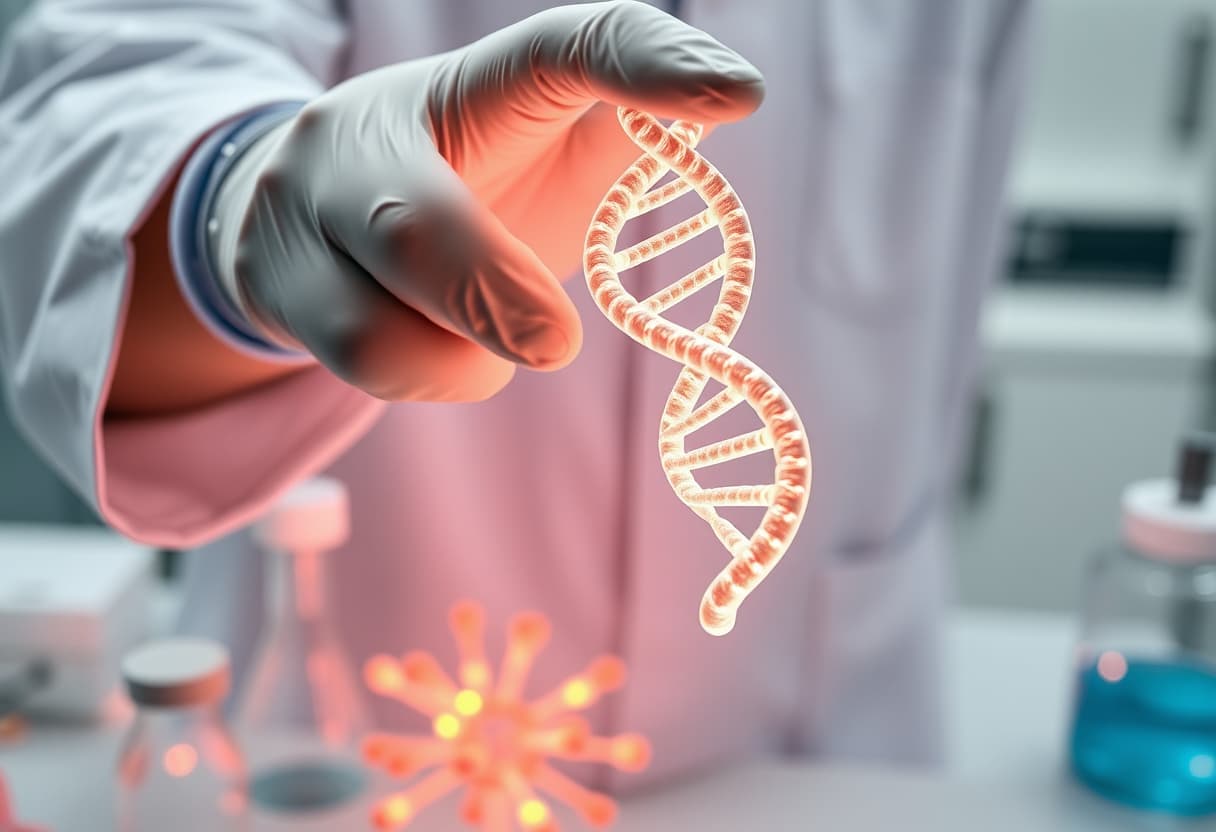
In 2012, Jennifer Doudna and Emmanuelle Charpentier published a paper in Science describing a molecular tool that could cut DNA at specific, programmable locations with unprecedented precision and simplicity. The tool was CRISPR-Cas9 — Clustered Regularly Interspaced Short Palindromic Repeats, combined with the Cas9 protein. Their work earned the Nobel Prize in Chemistry in 2020.
The paper described something that had been a goal of molecular biology for decades: the ability to edit the genetic code of living organisms reliably, precisely, and cheaply enough to be used routinely in laboratories around the world. CRISPR achieved this. The effects on biology, medicine, and agriculture have been immediate and sweeping.
How It Works
CRISPR is derived from a natural immune system found in bacteria. Bacteria that survive viral infection can store short sequences of viral DNA in their own genome — the "CRISPRs." When the same virus attacks again, the bacterium transcribes these sequences into RNA (guide RNA), which then scans the bacterium's DNA-reading machinery for matching sequences. When a match is found, the Cas9 protein — which travels along with the guide RNA — cuts the DNA at that location.
Researchers realized they could hijack this system. By designing a guide RNA that matches any DNA sequence of interest, they could direct Cas9 to cut at any specific location in any genome. The cell, attempting to repair the cut, would either disrupt the target gene entirely (if the repair is imprecise) or incorporate a new DNA sequence provided by the researchers (if a template is given).
The implications: any gene can be turned off, modified, or replaced, in any organism whose genome can be sequenced.
CRISPR did not make gene editing possible. It made it fast, cheap, and accessible enough to transform biology from a field that studied genomes to one that could rewrite them.
What It Has Already Done
In medicine, CRISPR has produced several notable early successes. Sickle cell disease and beta thalassemia — genetic blood disorders caused by mutations in the hemoglobin gene — have been addressed in clinical trials with outcomes that stunned hematologists: patients who had required regular blood transfusions throughout their lives became essentially free of symptoms. The FDA approved the first CRISPR-based therapy (Casgevy, for sickle cell and beta thalassemia) in late 2023.
In oncology, researchers are using CRISPR to modify patients' T cells to better recognize and attack tumors. In infectious disease, scientists have used CRISPR to create mosquitoes that are resistant to the malaria parasite. In agriculture, CRISPR has been used to develop disease-resistant crops, faster-growing fish, and pigs with organs potentially suitable for human transplant.
The Ethical Dimensions
The capabilities introduced by CRISPR are not morally neutral. Three areas of ethical concern are most serious.
Germline editing. In 2018, Chinese scientist He Jiankui announced that he had used CRISPR to edit human embryos that were then implanted and born as babies — the first gene-edited human beings. He had disabled a gene (CCR5) that the HIV virus uses for cell entry, attempting to confer HIV resistance. The international scientific community's response was nearly uniform condemnation: the editing was premature, the safety profile unknown, the consent process inadequate, and the target gene (CCR5) has other functions whose disruption may carry health costs. He was sentenced to three years in Chinese prison.
The fundamental ethical issue with germline editing — editing that is heritable — is that it affects not just the individual but all their descendants, without those descendants' consent, on the basis of decisions made under current (necessarily incomplete) knowledge.
Enhancement vs. treatment. The boundary between treating disease and enhancing normal function is not always clear, but it matters morally. Using CRISPR to eliminate sickle cell disease is relatively uncontroversial. Using it to increase muscle mass, boost intelligence, or select for preferred physical traits raises different questions about justice, consent, and what it means to be human.
Equity. Early gene therapies are extraordinarily expensive. If CRISPR-based treatments remain accessible only to the wealthy, a technology developed partly with public funding could widen existing health disparities rather than narrow them.
These questions do not have simple answers, but they have the quality of being genuinely new — generated by a capability that didn't exist before 2012. The hard work of working through them is as urgent as any technical challenge in the field.
¹ Jennifer Doudna & Emmanuelle Charpentier — "A Programmable Dual-RNA–Guided DNA Endonuclease in Adaptive Bacterial Immunity" (2012), Science ² Jennifer Doudna — A Crack in Creation (2017), Houghton Mifflin Harcourt ³ National Academies of Sciences — "Heritable Human Genome Editing" (2020)