Every habit follows the same underlying structure. A cue triggers a routine, which produces a reward. Over repetition, this sequence is encoded into the brain's basal ganglia as a chunk of automatic behavior — a program that runs with minimal cognitive overhead. This is the habit loop, and understanding it changes how you think about behavior change.
The neuroscience was worked out in detail in the 1990s by Ann Graybiel and colleagues at MIT. They implanted sensors in rats' basal ganglia and watched what happened as the rats learned to navigate a maze to find chocolate. Early in learning, neural activity spiked throughout the entire maze run. As the route became habitual, the spiking condensed: activity surged at the start of the maze (the cue) and again at the end when the chocolate arrived (the reward) — but almost nothing happened in between. The brain had "chunked" the middle portion into automatic execution.
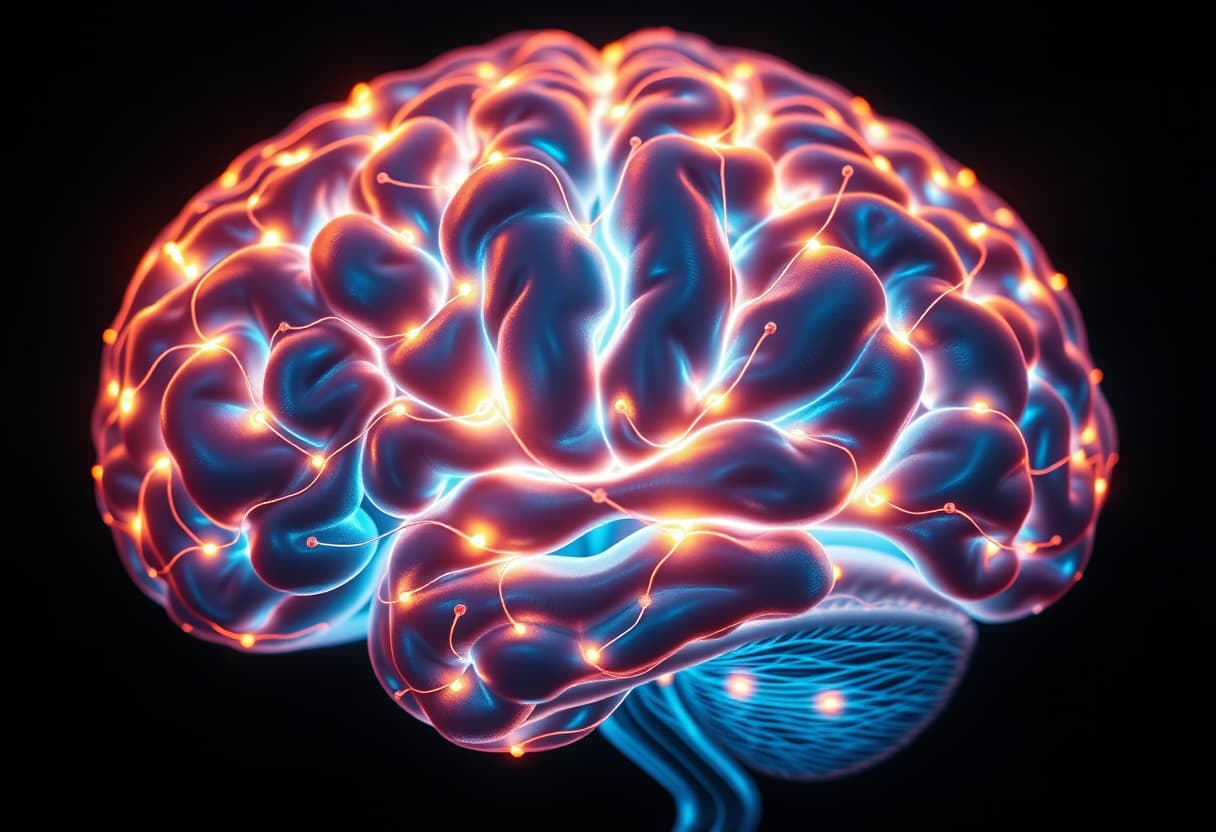
The same process operates in humans. The prefrontal cortex — responsible for deliberate, effortful thinking — essentially checks out once a habit is established. The basal ganglia runs the program. This is why habits feel effortless, and also why they're hard to interrupt: the brain has delegated them to a system that doesn't do deliberate reasoning.
The Three Components
The cue is the trigger that activates the routine — a time of day, a location, an emotional state, other people, or a preceding behavior. Research by Wendy Wood at USC suggests that most habit cues fall into one of these five categories. The specificity matters: the more reliably a cue predicts a reward, the more strongly the brain encodes the associated routine.
The routine is the behavior itself — the chunk of action that the basal ganglia has automated. It can be physical (walking a particular route, reaching for a phone), cognitive (catastrophizing when stressed), or emotional (turning inward when criticized).
The reward is what reinforces the pattern — what the brain learns to anticipate and eventually to crave. The reward doesn't have to be pleasant by any objective standard; it simply has to satisfy something. The routine of checking email compulsively is reinforced by a reward of relief (maybe something important arrived) even when the checking is primarily driven by anxiety.
The habit loop is a conservation mechanism. The brain is trying to save energy, not sabotage you.
The Role of Craving
Charles Duhigg, synthesizing the research for a general audience, identified a fourth element that explains the durability of habits: craving. Once the habit loop is established, the cue begins to trigger not just the routine but an anticipatory craving for the reward — a spike of dopamine before the reward even arrives.
This is why cues become uncomfortable when ignored. The alcoholic who walks past a bar they used to frequent doesn't just feel an absence of desire; they feel a pull, a craving, that is physiologically real. The cue has been linked to an anticipatory reward signal. Willpower is fighting not just habit but neurobiology.
How to Change a Habit
The classic behavior change strategy of "just stop doing X" almost never works for established habits, because it addresses only the routine and ignores the underlying loop. The cue still fires, the craving still activates, and something must fill the gap.
The most research-supported framework for habit change is the habit substitution model: keep the cue, keep the reward, change the routine in between. This exploits the brain's existing loop structure rather than fighting it.
Identify the cue precisely (not just "stress" but "3pm, after back-to-back meetings, at my desk"). Identify the actual reward (not just "I felt better" but "I needed a social interaction" or "I needed movement" or "I needed a sense of accomplishment"). Then design a new routine that responds to the same cue and delivers the same reward.
This is why exercise is often recommended as a replacement for stress-eating: if the actual reward from food is stress relief plus a brief sense of pleasure, vigorous exercise can provide both — once the new loop is established.
The establishment of a new loop is the hard part. It requires deliberate repetition — not motivation but implementation intentions: "When X happens, I will do Y." Research by Peter Gollwitzer shows that this specific if-then format dramatically improves follow-through on new routines compared to general intentions.
Habits are not character. They are programs. Programs can be rewritten — but only if you understand how they're structured.
¹ Charles Duhigg — The Power of Habit (2012), Random House ² Ann Graybiel — "The Basal Ganglia and Chunking of Action Repertoires" (1998), Neurobiology of Learning and Memory ³ Wendy Wood & Dennis Rünger — "Psychology of Habit" (2016), Annual Review of Psychology