Most ethical philosophy asks a question about action: What should I do? The debates that follow — about consequences, duties, virtues, contracts — are debates about how to choose and justify choices.
Iris Murdoch thought this was the wrong place to start.
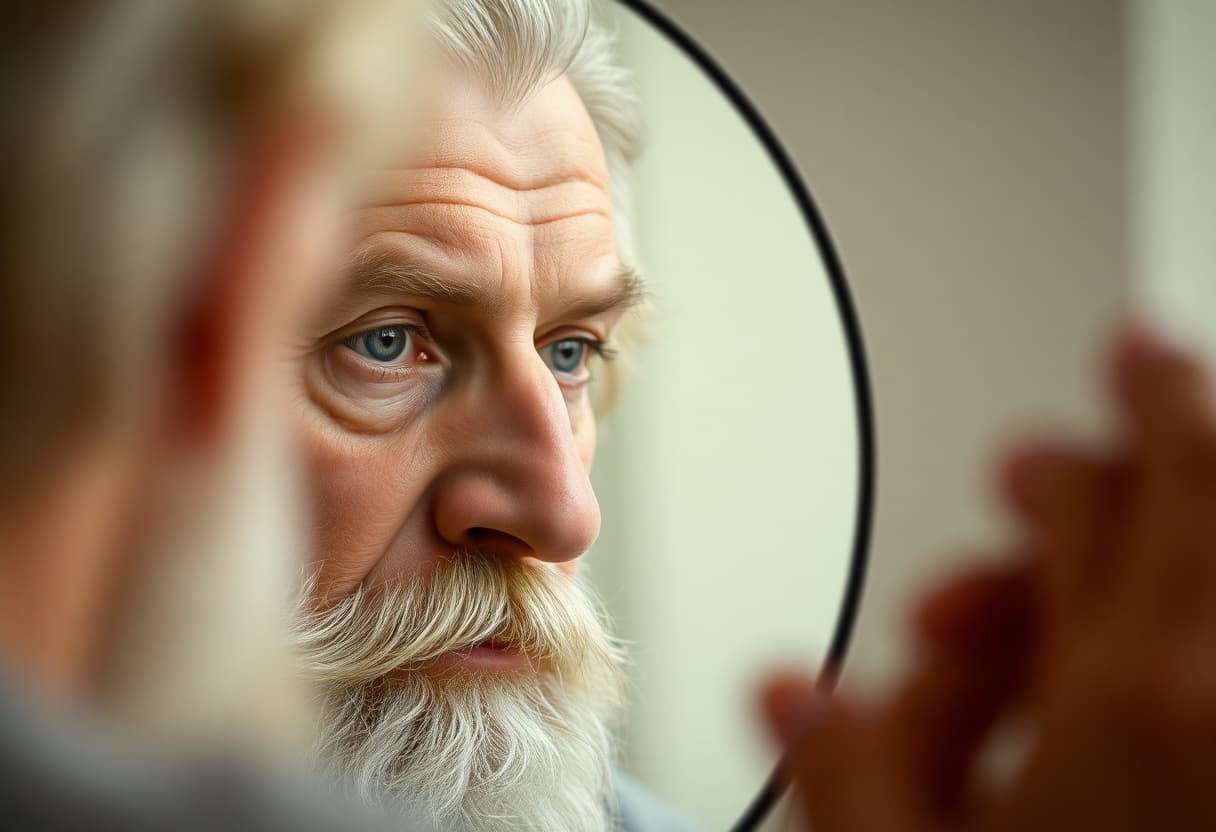
The British philosopher's most enduring contribution is the argument that moral life begins not in the moment of decision but in the quality of our attention long before any choice arrives. Ethics, she insisted, is fundamentally a question of seeing — and most of what makes us morally better or worse happens in the way we look at the world, not in the moments when we finally act.
The Problem with the Will
Murdoch's 1970 collection The Sovereignty of Good opens with a critique of the dominant picture of moral agency in mid-century British philosophy.¹ That picture imagined the self as a kind of neutral sovereign — a will that surveys a world of facts, then makes free choices among them. The moral work, on this view, is choosing correctly.
But Murdoch noticed something the picture missed. By the time we reach the moment of choice, our perception of the situation has already done most of the moral work. Two people can face identical circumstances and see entirely different things — not because one has access to facts the other lacks, but because their attention has been shaped differently over years of inner life.
A person who habitually dwells in resentment, self-pity, or fantasy does not suddenly see their neighbor clearly in the moment they must decide how to treat them. The vision they bring to that moment has been formed long before.
"I can only choose within the world I can see, in the moral sense of 'see' which implies that clear vision is a result of moral imagination and moral effort." — Iris Murdoch, The Sovereignty of Good
The Fat Relentless Ego
At the heart of Murdoch's philosophy is a diagnosis: the primary obstacle to moral life is the self — specifically the self's tendency toward self-consoling fantasy, domination, and the subtle distortion of reality to serve its own needs.
She called this the fat relentless ego: the restless inner machinery that interprets everything in terms of its own anxieties, grievances, desires, and vanities. Most of what passes for clear perception is actually a kind of soft hallucination, with the world's features exaggerated or minimized to match the ego's needs.
This is not primarily a claim about dishonesty. We don't consciously choose to distort. The distortions operate beneath the level of deliberate decision, in the habitual patterns of attention that shape what we even notice.
The moral task, then, is not primarily about making better choices. It is about purification of attention — the slow work of learning to see things as they actually are, rather than as we need them to be.
Unselfing and the Beautiful
Murdoch's solution is what she calls unselfing: moments and practices that draw attention away from the ego and toward reality. She finds these moments in encounters with great art, music, mathematics, and nature — and she draws on Simone Weil's concept of attention as a model for what she means.²
Her most famous example is the moment of looking at a kestrel in flight. A person consumed by petty anxieties and resentments looks up and sees the hawk. For that instant, the ego-machinery stops. The world becomes simply what it is: precise, indifferent, beautiful. When the person looks back down, something has shifted. The anxieties that felt so urgent have loosened their grip.
This is not escapism. Murdoch argues that these moments of genuine attention — whether to a hawk, a painting, a person, or a mathematical proof — train the faculty of attention itself. They build the capacity for the kind of clear-eyed presence that makes genuine moral action possible.
Love, in Murdoch's account, is precisely the correct and truthful attention to another person — seeing them as they actually are, not as a prop in one's own drama. This is why love is hard. It requires the defeat of the ego's distorting grip.
The Connection to Virtue Ethics
Murdoch's project connects naturally to the revival of Aristotelian virtue ethics that her generation helped inspire. Where Aristotle emphasized the habituation of character through practice, Murdoch emphasized the habituation of perception through sustained attention. Both agree that moral life cannot be reduced to a set of rules or calculations applied to situations; both insist that who you are matters more than what algorithm you use.
She was also deeply influenced by Plato, whom most modern philosophers had largely set aside. Her reading of Plato took seriously his claim that the Good is something real that we can orient toward — not a subjective preference or a social construct, but a genuine standard to which our perception can either conform or fail to conform.³
Seeing as a Practice
The practical implication of Murdoch's philosophy is quietly demanding. If the moral life is primarily a matter of attention, then the daily practices that shape attention are morally serious — not as supplements to the real ethical work, but as the real ethical work itself.
This includes: how carefully we listen to other people, whether we allow ourselves to sit with uncomfortable truths or retreat to flattering stories, whether we approach the people we find difficult with genuine curiosity or with defensive categories already in place.
The hard question Murdoch leaves us with is not "Did I make the right choice?" but "Was I actually seeing what was there?" — and the honest answer to that question is almost always more complicated than we'd like to admit.
Sources ¹ Iris Murdoch — The Sovereignty of Good (1970), Routledge ² Simone Weil — Waiting for God (1951), trans. Emma Craufurd, Harper Perennial ³ Maria Antonaccio — Picturing the Human: The Moral Thought of Iris Murdoch (2000), Oxford University Press ⁴ Justin Broackes, ed. — Iris Murdoch, Philosopher (2012), Oxford University Press