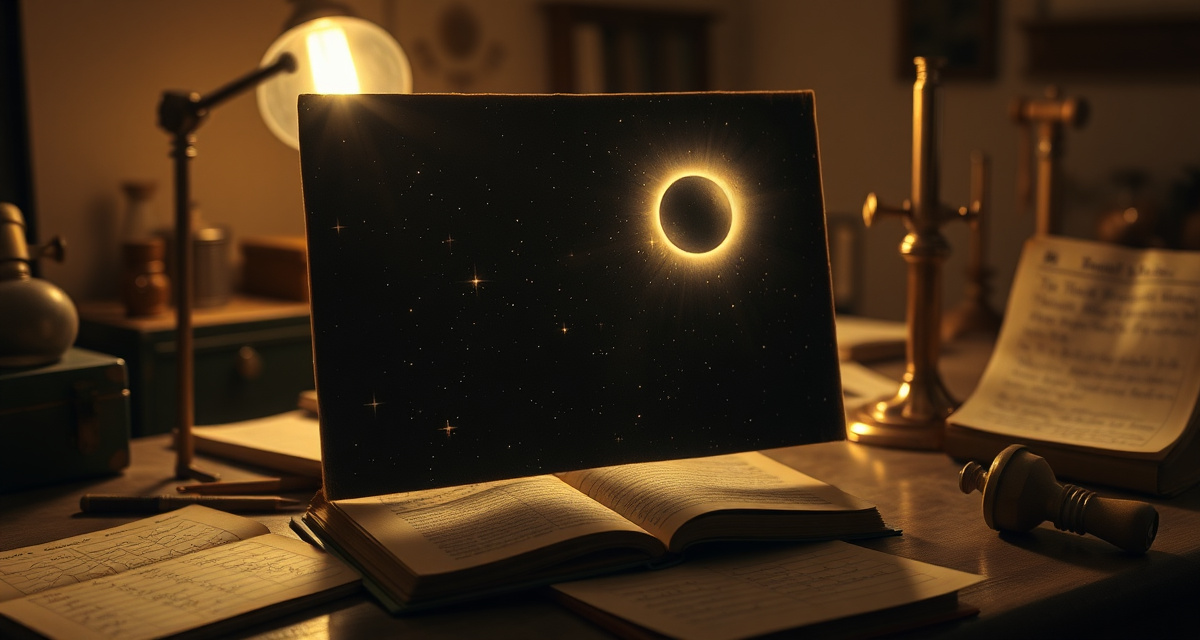
In 1919, a young Viennese named Karl Popper attended a public lecture by Albert Einstein, who had recently published his general theory of relativity. The theory made a specific prediction: that starlight passing near the sun would be bent by a measurable, calculable amount. A British expedition led by Arthur Eddington had just confirmed this prediction during a total solar eclipse. Popper was struck less by what Einstein had predicted than by what he had been willing to risk.
The theory could have been wrong. Eddington's photographs could have shown the starlight bending by a different amount, or not at all, and the whole elegant structure of general relativity would have collapsed. Einstein staked his theory on a specific, measurable, disprovable prediction.
Popper, meanwhile, had been reading Marx on history and Freud on the mind. These were the intellectual heavyweights of early twentieth-century Vienna. But something about them had begun to bother him — something he could not quite articulate until the Einstein lecture. With Marx and Freud, every possible observation seemed to confirm the theory. A patient who was aggressive confirmed Freudian theory; so did a patient who was passive. A revolution fitted Marxist prediction; so did a failure to revolt. Nothing could count as evidence against the theory.
From that contrast, Popper drew a conclusion that would reshape twentieth-century philosophy of science. A theory is scientific not because it can be proved true, but because it can, in principle, be proved false.
The demarcation problem
Popper was responding to a long-standing puzzle in the philosophy of science called the demarcation problem. What makes a claim scientific, as opposed to metaphysical, religious, or pseudo-scientific? Astrology and astronomy both make predictions about the heavens. Psychoanalysis and psychology both make claims about the mind. Homeopathy and medicine both offer cures. What distinguishes the science from the imposter?
For most of the previous century, the dominant answer had been verificationism: a claim is scientific if it can be verified by observation. A theory accumulates evidence, and once it has accumulated enough, it is confirmed. Science, on this view, was a process of piling up supportive observations.
Popper rejected this. His reason came from a famous problem raised by David Hume two centuries earlier — the problem of induction. No matter how many white swans you observe, you cannot logically conclude that all swans are white. A single black swan disproves the generalization. Confirmation, Popper argued, is inherently asymmetric: you can never finally verify a general claim, but you can decisively refute one.
This asymmetry became the foundation of Popper's proposal. A theory is scientific if it specifies, in advance, the kind of observation that would show it to be false. The theory "forbids certain things from happening," as Popper put it. A scientific theory is one that sticks its neck out.
Falsifiability, not falsification
One of the most common misunderstandings is to confuse falsifiability (a logical property of a theory) with falsification (the actual act of proving it wrong). A theory need not be false to be scientific; it needs only to be the kind of theory that could be shown false.
Einstein's theory of relativity is falsifiable, even though it has survived every test so far. The claim that all electrons have the same mass is falsifiable — you could in principle measure one that doesn't. "Water boils at 100°C at sea level under standard pressure" is falsifiable. "God is love" is, on Popper's view, not falsifiable — which does not mean it's false or meaningless, only that it is not operating as a scientific claim.
This last distinction matters enormously. Popper is often misread as saying that anything unfalsifiable is nonsense. He said no such thing. Falsifiability is a criterion for distinguishing science from other activities, not a criterion for what counts as true, valuable, or meaningful. Ethics, aesthetics, mathematics, and theology are full of claims that are important, rigorous, and unfalsifiable in Popper's technical sense. He was drawing a line around a specific kind of knowledge, not discarding everything outside it.
What a good scientific theory looks like
On Popper's account, good scientific theories share several features:
They make risky predictions. A theory that predicts "something will happen, somewhere, eventually" is not taking a risk. A theory that predicts "this specific event will happen at this specific time under these specific conditions" is.
They forbid observations. If a theory is compatible with every possible experimental outcome, it says nothing. It is the specific outcomes a theory rules out that give it scientific content.
They are held tentatively. No theory is ever proved. It has only, so far, survived attempts to refute it. Scientists should hold their theories as corroborated but provisional — always ready to be replaced by a theory that explains more and forbids more.
They are clear enough to be tested. Vague theories cannot be falsified because they can always be reinterpreted. The move from "stress causes disease" to "chronic elevation of cortisol measurably increases inflammatory markers in patients meeting criteria X" is the move from an unfalsifiable slogan to a testable claim.
The critiques
Popper's view dominated mid-twentieth-century philosophy of science, but it has not gone unchallenged.
Thomas Kuhn argued, in The Structure of Scientific Revolutions (1962), that actual scientists rarely abandon a theory just because of a single refuting observation. They patch, modify, and defend. Science changes, Kuhn said, through larger "paradigm shifts" in which whole frameworks are replaced.
Imre Lakatos tried to reconcile Popper and Kuhn by proposing that scientists work within research programs — networks of theories with a protected "hard core" and a flexible "protective belt" of auxiliary hypotheses. A program is progressive if it keeps predicting new things, degenerative if it merely explains away failures.
The Duhem–Quine thesis points out that no theory is tested in isolation. Any experiment depends on dozens of auxiliary assumptions. When an experiment goes wrong, you can never be sure whether it's the theory, the equipment, or one of the assumptions that's at fault. Pure falsification, in practice, is rare.
These are serious critiques. Few contemporary philosophers of science hold to Popper's view in its strongest form. But almost all of them treat it as the starting point of the conversation.
Why it still matters
Even if falsifiability is not the whole story of science, Popper's basic insight has held up. A discipline that refuses to specify what would count as evidence against its claims is not doing science. This remains a useful test.
Applied carefully, it helps distinguish:
- Astronomy from astrology (the first makes testable predictions; the second rearranges itself to fit any outcome).
- Psychiatry from pseudoscience (the first holds diagnoses to measurable criteria; the second cannot be disconfirmed).
- Climate science from conspiracy theories (the first makes quantitative predictions that have, decade after decade, been tested; the second is unfalsifiable by design).
It also keeps scientists honest. A researcher whose theory "works" no matter what the data shows is not testing a theory; they are protecting one. The Popperian question — what would prove me wrong? — is the best single question a scientist, or anyone else making an empirical claim, can ask of themselves.
The first to plead his case seems right, until another comes and examines him. (Proverbs 18:17)
Popper was making, in philosophical language, a very old point. A claim that cannot be cross-examined is not yet knowledge. Science, at its best, is the willingness to be cross-examined — and to hold your conclusions loosely enough to let the examination actually change your mind.