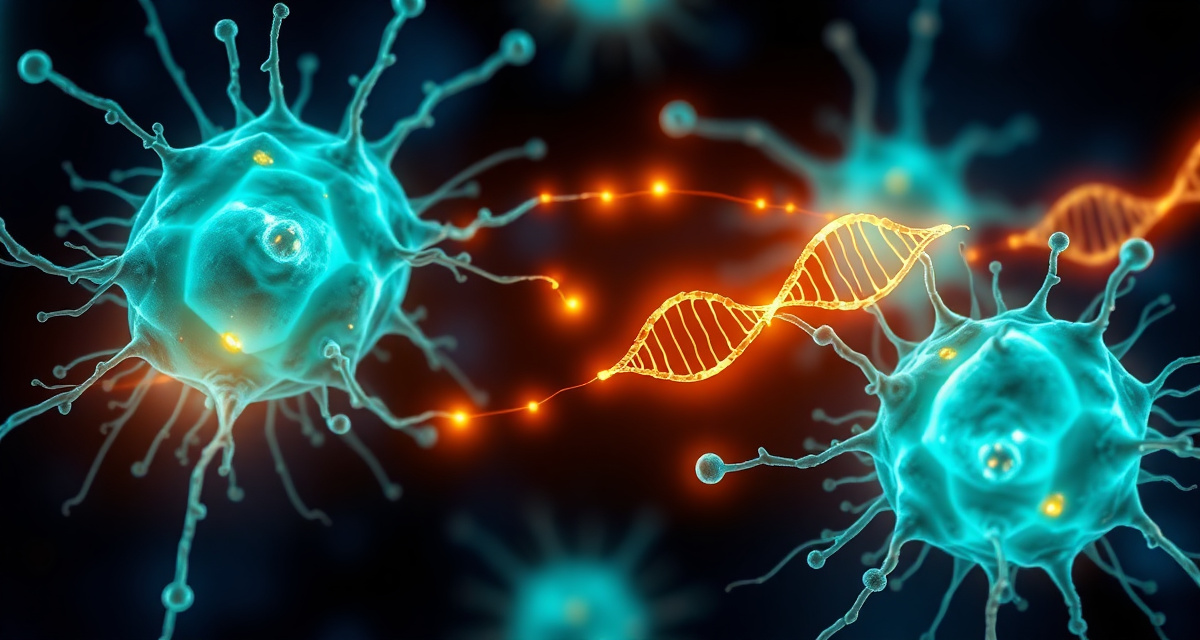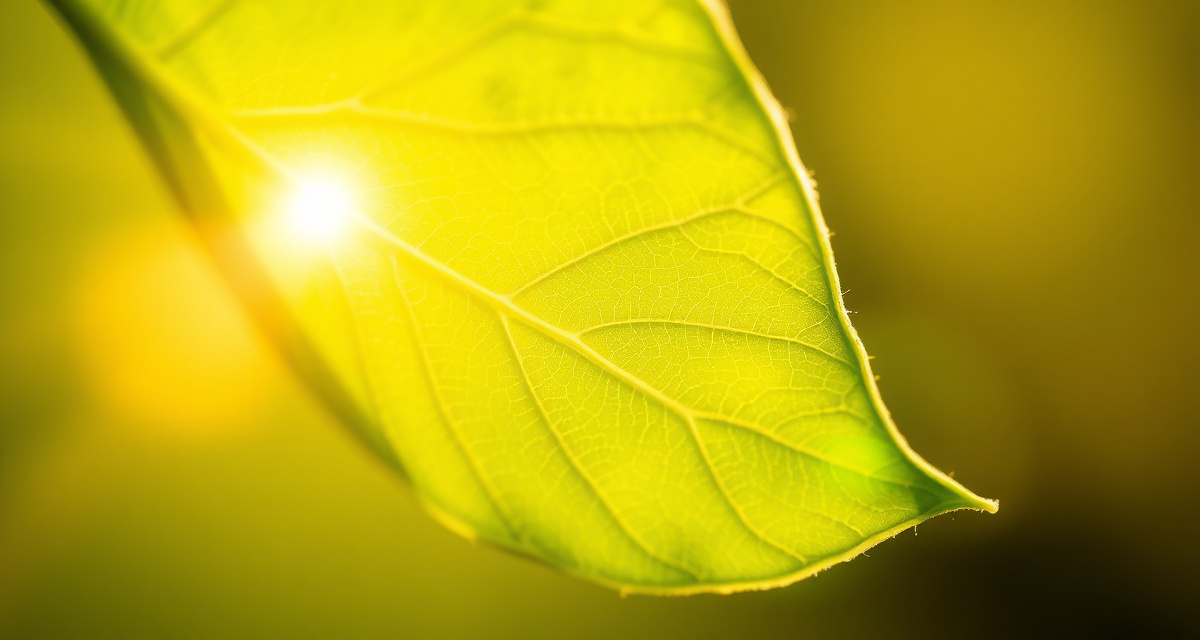
Walk through any forest, meadow, or kelp bed, and you are walking through machines that quietly run on starlight. Plants, algae, cyanobacteria, and a few stranger organisms convert photons into living tissue at a rate of roughly 130 billion metric tons of carbon per year, planet-wide. Almost every calorie you have ever eaten, every breath of oxygen you have ever taken, every drop of fossil fuel anyone has ever burned, traces back to this one chemical reaction.
Photosynthesis is, by some distance, the most consequential reaction in the biosphere. It is also one of the more elegant and surprising pieces of chemistry on Earth.
The Reaction in One Equation
The textbook summary fits on a single line:
6 CO₂ + 6 H₂O + light energy → C₆H₁₂O₆ + 6 O₂
Six molecules of carbon dioxide, six molecules of water, and a dose of solar energy in. One molecule of glucose and six molecules of oxygen out. The plant takes inorganic ingredients (gas and water), captures sunlight, and produces a sugar that stores chemical energy plus an oxygen molecule that the plant has no use for.
The summary is correct. The actual chemistry is much richer.
The Two Halves of the Reaction
Photosynthesis runs in two coupled stages.
The first stage — the light-dependent reactions — happens on the membranes inside chloroplasts, organelles densely packed inside plant cells. Pigment molecules, primarily chlorophyll, absorb photons and pass the energy through a chain of protein complexes called Photosystem II and Photosystem I. The energy is used for two things: to split water molecules into hydrogen, electrons, and oxygen; and to pump hydrogen ions across a membrane, building up an electrochemical gradient.
The hydrogen-ion gradient is then used by an enzyme called ATP synthase to assemble ATP, the universal cellular energy currency. The electrons that came from the split water are passed along until they reduce another molecule, NADP⁺, to NADPH — a chemical "loaded battery" that carries reducing power.
The oxygen released as a byproduct of water-splitting is the same oxygen you are breathing right now.
The second stage — the light-independent reactions, also called the Calvin cycle — does not directly require light. It happens in the soluble interior of the chloroplast and uses the ATP and NADPH built in stage one to take CO₂ from the air and stitch it into sugars. The central enzyme of the Calvin cycle is RuBisCO — ribulose-1,5-bisphosphate carboxylase/oxygenase — and it is, almost certainly, the most abundant protein on Earth.
The Strange Genius of Chlorophyll
Chlorophyll, the pigment that makes plants green, is responsible for absorbing the photons that drive the whole reaction. Its color tells you something interesting: chlorophyll reflects green light and absorbs mostly red and blue.
The reason is a matter of how chlorophyll's molecular structure interacts with photons of different energies. Chlorophyll absorbs photons whose energies are most useful for the photochemistry that follows. Green photons, in the middle of the visible spectrum, fall outside chlorophyll's strongest absorption bands. So plants ignore them. Earth's vegetation is green not because green is the most abundant wavelength of sunlight (it is) but because the surrounding wavelengths above and below green are more readily captured by the pigment.
Plants are green because they are leaving the most abundant photons on the table — and the chemistry beneath the leaf has reasons for it.
The C3, C4, and CAM Variations
Not all photosynthesis runs the same way. Most plants — including wheat, rice, and trees — use what is called C3 photosynthesis, named for the three-carbon molecule that is the first stable product of the Calvin cycle. C3 photosynthesis is the ancestral form.
When atmospheric CO₂ dropped over geologic time and global temperatures rose, an inefficiency in RuBisCO became more costly. RuBisCO sometimes binds oxygen instead of CO₂ — a wasteful reaction called photorespiration — and the problem worsens at high temperatures. Some plants evolved workarounds.
C4 photosynthesis, found in corn, sugarcane, and many tropical grasses, uses a four-carbon intermediate to concentrate CO₂ near RuBisCO, suppressing photorespiration. C4 plants are more efficient under hot, sunny, dry conditions.
CAM photosynthesis, found in succulents and cacti, separates the steps in time rather than space — the plant opens its stomata at night to take in CO₂ (when it is cooler and water loss is minimized) and runs the Calvin cycle during the day on the stored carbon. This is why a desert cactus can survive on tiny amounts of water that would kill a maple tree.
C3, C4, and CAM are independent evolutionary solutions to the same constraint. C4 photosynthesis has evolved more than sixty separate times in the angiosperm lineage — a striking case of convergent evolution.
The Reaction That Made the Atmosphere
Roughly 2.4 billion years ago, cyanobacteria — microscopic single-celled organisms — evolved oxygenic photosynthesis. Before them, Earth's atmosphere had almost no free oxygen. After them, oxygen built up in the oceans and then the atmosphere over hundreds of millions of years, in what is now called the Great Oxygenation Event. This was, on one hand, the largest mass extinction in Earth's history — anaerobic life forms that could not tolerate oxygen were nearly wiped out. On the other hand, it made everything that followed possible. Aerobic respiration extracts roughly nineteen times more energy per glucose molecule than anaerobic fermentation does. Without oxygen, multicellular life as we know it could not exist.
Every breath you take is a kind of late echo of cyanobacteria, two and a half billion years ago, beginning to split water.
What We Still Do Not Fully Understand
Despite enormous progress, photosynthesis still hides surprises. The light-harvesting complexes inside plants and bacteria appear to use quantum coherence to transfer energy between pigments with remarkable efficiency — a finding that emerged from femtosecond spectroscopy experiments beginning around 2007. The full role of quantum effects in biology remains an active and contested research area.
Engineers are now attempting artificial photosynthesis: synthetic systems that mimic the reaction to produce hydrogen fuel or chemical feedstocks directly from sunlight, water, and CO₂. None of them yet match the efficiency of a leaf.
Why It Matters
Photosynthesis is the foundation of nearly every food chain on the planet. It maintains the atmospheric oxygen we depend on. It removes vast amounts of CO₂ from the air every year and locks the carbon into living tissue. Understanding it more deeply is not abstract — it shapes everything from agricultural productivity to climate modeling to the search for sustainable energy alternatives.
A leaf is small, quiet, and easy to overlook. The chemistry inside it powers nearly everything alive. Two centuries of careful work have revealed the broad strokes; the fine details are still being discovered today, in laboratories with instruments fast enough to watch electrons move on the timescale of a quadrillionth of a second. Photosynthesis remains one of the most studied — and still partly mysterious — reactions in nature.