Suppose someone asks whether you think nuclear power is dangerous. Before you can list reactor safety statistics or recall the casualty count of past accidents, something else has already happened. A feeling has formed — a quick, almost automatic positive or negative impression. By the time you start "thinking" about it, your reasoning is mostly arranging evidence around a feeling that arrived first.
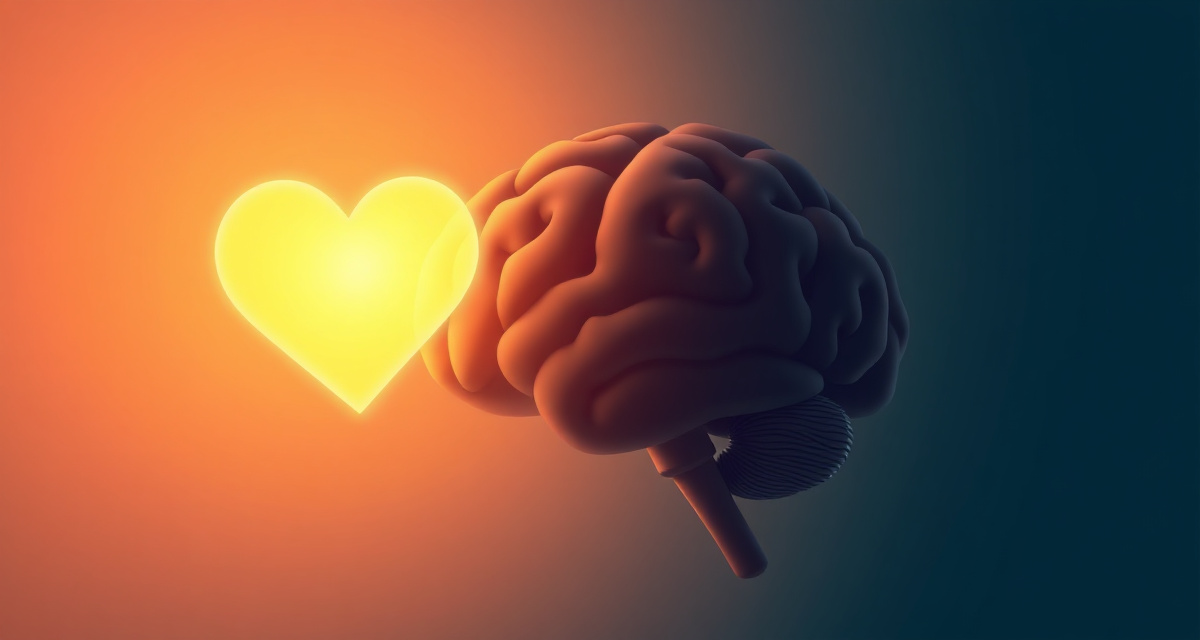
This is the affect heuristic: the cognitive shortcut by which our feelings about something stand in for, and shape, our judgments of its risk and benefit. The term was coined by psychologist Paul Slovic and colleagues in the early 2000s, and it has become one of the more important findings in modern decision research.
What the Heuristic Actually Is
A heuristic is a mental shortcut — a way of arriving at a useful answer without fully working through the calculations the question logically requires. Heuristics are usually fast, often accurate enough, and occasionally catastrophically wrong.
The affect heuristic is specifically about feeling. When asked to judge how risky or beneficial something is, we don't typically retrieve statistics. We consult our gut. If we feel good about something — say, solar panels — we tend to estimate that its benefits are high and its risks are low. If we feel bad about something — say, nuclear power — we tend to estimate that its benefits are low and its risks are high.
The strange thing is that in the real world, risk and benefit are positively correlated, not negatively correlated. Activities with high benefits often have meaningful risks (driving, surgery), and many low-risk activities have low benefits (sitting on the couch). But people intuit them as inversely related — high benefit means low risk, and high risk means low benefit. Slovic and his colleagues showed this experimentally in 2000.
The reason is the affect heuristic. A single feeling is doing the work of two judgments.
The Original Studies
Slovic's research team gave subjects information designed to change their feelings about an activity (e.g., natural gas) without changing the underlying facts. When they read material that increased favorability, subjects rated benefits as higher and risks as lower. When they read material that decreased favorability, both ratings shifted in the opposite direction.
In another experiment, they manipulated time pressure. When subjects had less time to think, the inverse correlation between perceived risk and perceived benefit grew stronger — indicating that the affect heuristic was operating most powerfully when deliberate reasoning was suppressed.
A third strand of research found that adding a small probability of a major loss made gambles more aversive when the loss was emotionally vivid (loss of life, severe illness) than when it was numerically equivalent in expected value but emotionally muted.
Why It Evolved
The affect heuristic isn't a glitch. It's an efficient way for a mind that lives in the world to make rapid decisions when full analysis is impossible.
Antonio Damasio's work on the somatic marker hypothesis offers a complementary perspective: the brain learns associations between actions and bodily/emotional states, and those marker signals constrain decision-making before conscious reasoning even begins. People with damage to the ventromedial prefrontal cortex — a region central to integrating emotion with decision — make catastrophically bad practical choices despite intact logical reasoning.
In other words, affect is not the opposite of reasoning. It is part of how decisions get made at all. The problem is not that we feel; it is that feeling is sometimes a poor proxy for what we're trying to evaluate.
Where It Goes Wrong
Several systematic biases follow from the affect heuristic:
1. Risk perception detached from frequency. People rate plane crashes, shark attacks, and terrorism as bigger threats than driving, falls, or heart disease. The first set is emotionally vivid; the second set is statistically dominant. Vividness drives feeling, feeling drives perceived risk.
2. Halo effects in evaluation. Positive feelings about a person, brand, or cause spread to traits we have no data on. A charismatic CEO is judged competent; a likable politician is judged honest.
3. Marketing leverage. Advertising rarely persuades through new information. It works by attaching feelings to products. The affect heuristic is the mechanism by which "good vibes" reliably move purchasing.
4. Resistance to base rates. When emotions about a category run high, statistical information loses its grip. People underweight low base rates of harm in feared categories and overweight low base rates of benefit in admired ones.
The Affect–Information Interaction
One of the most interesting wrinkles is how the affect heuristic interacts with quantitative information. In a striking experiment by Hsee and others, subjects were less moved by a statistic about thousands of suffering children than by a single named child's story — even when both were presented together. This is sometimes called the identifiable victim effect, and it is closely linked to affect: emotional response scales nonlinearly with the vividness of the stimulus, not linearly with the magnitude of the harm.
This is a significant ethical wrinkle. Our affective response to a tragedy is bounded — we can be just as moved by one suffering child as by ten thousand. If feeling is doing the moral computation, scale gets lost.
What to Do About It
You cannot disable the affect heuristic. The neural circuitry that produces it is too deep and too useful. But you can blunt its worst effects:
- Notice the feeling first. Before you defend a position, ask yourself: do I think this is risky because I've considered the data, or because it makes me uneasy?
- Slow down on important decisions. Time pressure amplifies affect's grip on reasoning. The affect heuristic does not need to win when you have hours, days, or weeks.
- Translate stories into rates and rates into stories. When a vivid case is driving a judgment, look up the base rate. When a base rate is driving a judgment, find out who specifically is affected.
- Beware your own consistency. If your assessment of risks and benefits is too neatly inversely correlated, that is itself a signal that affect, not analysis, is doing the work.
"It is not the things themselves that disturb us, but our judgments about those things." — Epictetus, Enchiridion
The affect heuristic is one of the deepest mechanisms by which our judgments about the world are formed. Knowing it does not make us immune. It does, occasionally, give us a moment to look up from the feeling and ask whether the rest of the picture matches.