The Quiet Heroes of the Rocks
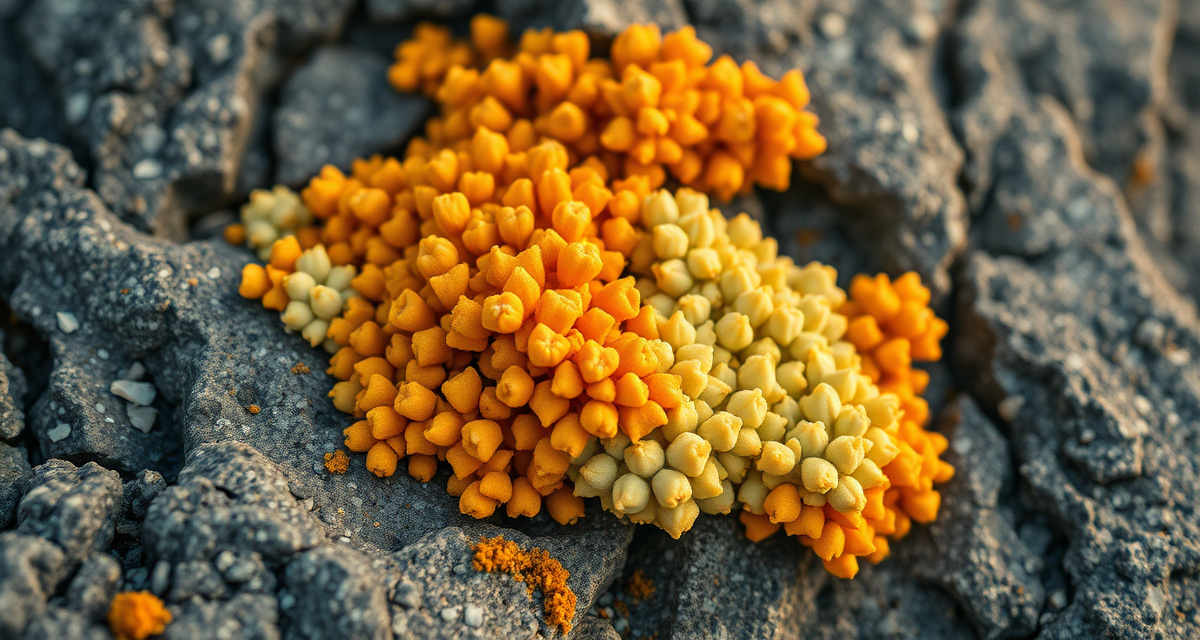
A walk through almost any wild place reveals them: pale green crusts on tree bark, orange splashes on tombstones, gray mats on rocks above the timberline. Lichens are ubiquitous. They colonize roughly 6% of Earth's land surface — more area than tropical rainforest. They survive in places where almost nothing else lives: Antarctic dry valleys, exposed boulder fields, the bare rock left behind by retreating glaciers.
For most of biological history, lichens were classified as plants. They aren't. They are something stranger: a stable partnership between organisms from different kingdoms, fused so completely that the result behaves as a single entity but is in fact a community.
The Discovery That Changed Botany
In 1867, the Swiss botanist Simon Schwendener published the radical proposal that lichens were not single organisms at all but rather composites of fungi and algae. Most of his colleagues thought he was mistaken or worse. Botanists had described thousands of lichen species, drawn elaborate taxonomies, debated their phylogeny — and now someone was claiming the entire group was misclassified.
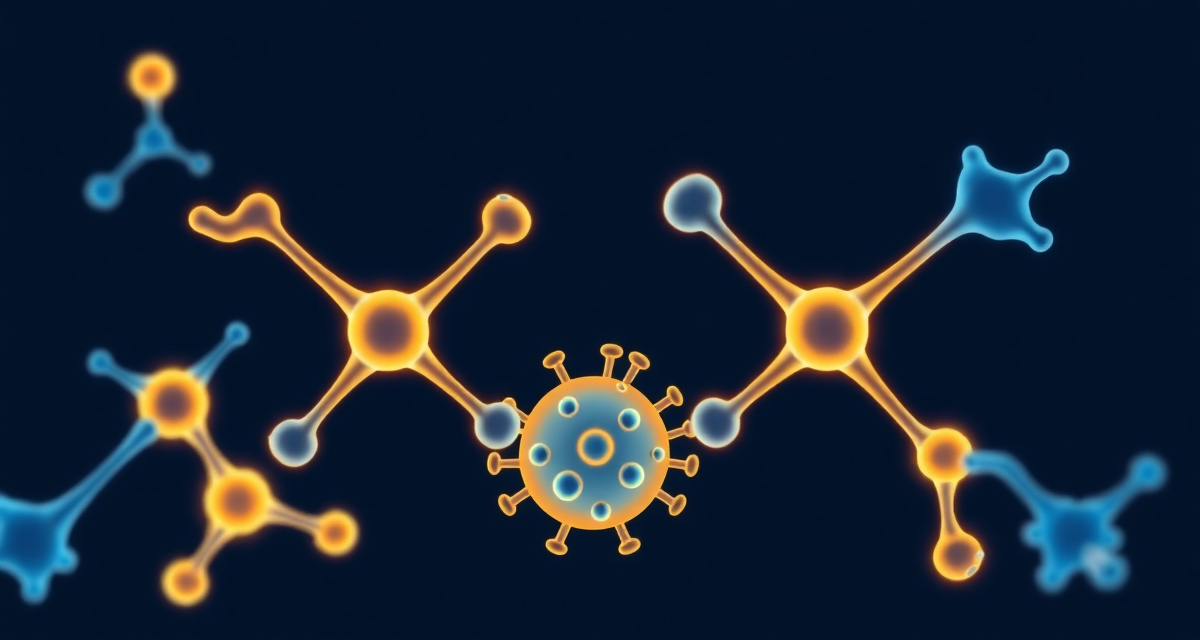
Schwendener turned out to be right. By the early 20th century, the consensus had shifted. A lichen is a symbiosis: a fungus (the mycobiont) provides the structure and protection; an alga or cyanobacterium (the photobiont) does the photosynthesis. The fungus alone cannot make its own food. The alga alone cannot survive the harsh, exposed environments where lichens thrive. Together, they do.
This was one of the first and clearest demonstrations that nature could compose new functional units from cross-kingdom partnerships. It anticipated the symbiotic theory of mitochondria and chloroplasts that Lynn Margulis would later make famous.
The Second Discovery That Changed Everything Again
For more than a century, the two-partner model was treated as settled. Then in 2016, a research team led by Toby Spribille at the University of Montana published a paper in Science that overturned it.
Looking at a lichen species (Bryoria fremontii) that has two color forms — one toxic, one not — Spribille and his colleagues searched for genetic differences between them. They found something unexpected: in addition to the known fungal and algal partners, a second fungus was present, a basidiomycete yeast embedded in the lichen's outer layer. And the abundance of this third partner correlated with the toxic form.
This was not a fluke. Follow-up work has shown that many lichens host basidiomycete yeasts, often consistently, in ways that suggest functional roles. Some lichens contain a fourth partner too — additional bacteria with apparently specific functions.
The simple two-partner story is over. Lichens look more like miniature ecosystems than two-organism contracts.
What Lichens Can Do That Plants Cannot
Lichens survive extremes that defeat most life:
- They can rehydrate from desiccation that would kill a plant. Some lichens recover full photosynthetic activity within minutes of receiving moisture, even after years of being dry.
- They tolerate ultraviolet radiation at levels that destroy most cellular machinery, thanks to pigments and protective compounds produced by the fungal partner.
- They survive in vacuum and cosmic radiation. The European Space Agency's lichen exposure experiments (BIOPAN and EXPOSE missions, 2005–2007) placed lichens on the outside of orbiting platforms for months. They survived and resumed photosynthesis on return.
This is why astrobiologists pay attention to lichens. If life exists in the harshest environments off Earth, it may have structural features lichens already model.
Slow Growth, Long Lives
Lichens grow slowly — most species expand a few millimeters per year. But some live for centuries. Rhizocarpon geographicum, the map lichen, can be more than 9,000 years old in alpine and Arctic environments. Researchers have used lichen growth to date glacial retreat in a technique called lichenometry, measuring the size of lichen colonies on freshly exposed rock to estimate how long the rock has been ice-free.
This makes lichens accidental historians. A boulder field whose oldest lichens are 200 years old tells you something about local climate two centuries ago that no instrument captured.
Lichens as Pollution Sensors
Lichens absorb nutrients and pollutants directly from the air — they have no roots. This makes them exquisitely sensitive to air quality. The species composition of lichens in a forest is one of the most reliable biological indicators of air pollution available.
Industrial cities of 19th-century Europe lost most of their lichens. The recovery of certain species in places like London and the Ruhr is one of the visible signs of cleaner air. Conversely, when researchers want to know how nitrogen deposition is affecting an ecosystem, they often sample the lichen community before they instrument the atmosphere.
A Philosophical Wrinkle
Lichens trouble the categories we use to think about life. They look like one organism, behave like one organism, reproduce more or less as one organism, occupy a habitat as one organism — and yet they are not, technically, an organism in the sense most textbooks use the term.
The boundary problems multiply. Where does the lichen end and the alga begin? When two lichen species merge or split partners, what happened? Is the partnership obligate (neither survives alone in nature) or facultative (each could theoretically survive but does better together)?
Biologists have increasingly come to see lichens not as anomalies but as illustrative. Life, on closer inspection, is full of stable partnerships that look like individuals only at a distance. Humans, with our trillions of microbial passengers, are not perfectly separable from our ecosystems either. Lichens just make the seam more visible.
What They Teach Us
The lichen story has been rewritten twice. The first revision exposed that what looks like one organism can be two. The second revision exposed that even two is often wrong — that the boundary between individual and community is more porous than 19th-century biology imagined.
Lichens are a slow-motion lesson in what life actually is: not isolated entities but stable partnerships, layered, mutualistic, more like ecosystems than like things.
The crust on the rock you walk past tomorrow is older, stranger, and more communal than it looks.