Every cell in your body — and there are something like 37 trillion of them — exists because, at some point in the recent past, another cell divided. Most of those cells will, in turn, divide again before you finish reading this article. The body is a continuous, microscopic factory for replication, and the precision of that factory is the difference between health and disease.
The cell cycle is the highly choreographed sequence by which a single cell duplicates its DNA, splits it cleanly between two daughters, and divides. When the cycle works, you get tissue maintenance, wound healing, growth, and immune response. When the cycle fails — when a single cell ignores the brakes and divides when it should not — you get cancer.
Understanding the cycle clarifies what cancer actually is, why it is so hard to cure, and why the targeted therapies of the last twenty years are starting to bend the curve.
The Four Phases
The cell cycle has four main phases, with one critical preamble:
G1 (Gap 1). The cell grows. It synthesizes proteins, builds organelles, and decides whether conditions warrant dividing at all. Most of your body's specialized cells — neurons, mature muscle cells — sit indefinitely in a quiet variant of G1 called G0, the resting state. They have decided not to divide.
S (Synthesis). The cell copies its DNA. All 3 billion base pairs, in roughly six to eight hours, with an error rate of about one mistake per 10 billion bases — staggering accuracy by any engineering standard.
G2 (Gap 2). A second growth and quality-check phase. The cell verifies that DNA replication finished cleanly, repairs any damage, and prepares the molecular machinery for division.
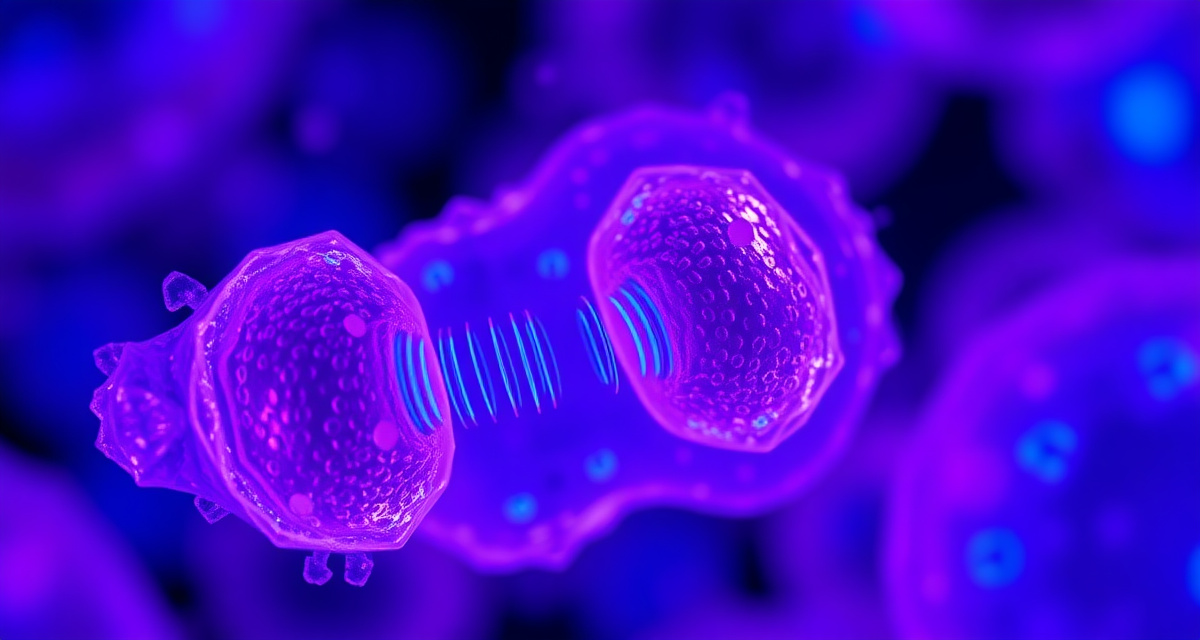
M (Mitosis). The cell physically splits. Chromosomes condense, line up at the cell's center, get pulled apart by spindle fibers, and end up in two daughter cells with a complete and (ideally) identical genome.
The whole cycle takes roughly 24 hours in actively dividing human cells, though the pace varies enormously by tissue.
The Checkpoints
The genius of the system is its checkpoints — molecular gates that block progression unless conditions are right. Three are especially important:
- The G1/S checkpoint ("the restriction point") asks: Is the DNA undamaged? Are growth signals present? Are nutrients sufficient? If yes, the cell commits to a full cycle. If no, it pauses or enters G0.
- The G2/M checkpoint asks: Did DNA replication complete correctly? Is the cell big enough to divide? Errors here can produce cells with duplicate or missing chromosomes.
- The spindle assembly checkpoint during mitosis verifies that every chromosome is properly attached to the spindle before allowing the cell to actually split.
These checkpoints are run by a sophisticated set of proteins — cyclins, cyclin-dependent kinases, tumor suppressors like p53 and Rb, and DNA damage sensors like ATM and ATR. When everything works, problematic cells either pause until repaired or are pushed into a controlled self-destruction called apoptosis.
The Nobel Prize in Physiology or Medicine in 2001 went to Leland Hartwell, Tim Hunt, and Paul Nurse for working out the basic logic of these controls.
Where Cancer Starts
Cancer is, at its core, a disease of the cell cycle's failure to govern itself. A normal cell becomes a cancer cell through an accumulation of mutations that progressively dismantle its checkpoints.
Hanahan and Weinberg's landmark 2000 paper The Hallmarks of Cancer (updated in 2011 and again in 2022) identified the core capabilities a cell must acquire on the road from normal to malignant. Most of them map directly onto the cell cycle:
- Sustained proliferative signaling — pushing the gas pedal
- Evading growth suppressors — disabling the brakes (often by mutations in p53 or Rb)
- Resisting cell death — silencing apoptosis when DNA damage should trigger it
- Enabling replicative immortality — turning back on the enzyme telomerase, which most adult cells normally suppress
- Genome instability and mutation — once the safeguards are off, mutations accumulate exponentially
The mutation in p53 is so central that the gene has been called "the guardian of the genome." Roughly half of all human cancers carry a damaged version. Lose your guardian, and the cell can no longer detect catastrophic DNA errors and order itself to die. The cycle keeps running.
Why It's So Hard to Cure
A few features of cancer make it especially difficult.
It evolves. Once mutations begin, the tumor itself becomes a population of slightly different cells competing for resources. Cells that happen to resist a given treatment survive and dominate. This is the reason a treatment can shrink a tumor for months and then suddenly stop working.
It is us. Bacteria and viruses are biologically distinct from human cells, which is why antibiotics and antivirals can target them selectively. Cancer cells are our own cells with broken brakes. Most chemotherapies work by hitting any rapidly dividing cell — which is why they also damage hair follicles, gut lining, and bone marrow.
It hides. Tumors actively suppress nearby immune cells, escape detection, and recruit blood vessels to feed their growth. The full Hallmarks framework now includes immune evasion and reprogramming of energy metabolism among the core capabilities.
Why There's Real Hope
The last two decades have shifted the picture meaningfully.
Targeted therapies. Drugs like imatinib (Gleevec) for chronic myeloid leukemia work by blocking the specific mutated protein driving the cell cycle in those cells. CDK4/6 inhibitors, used in some breast cancers, directly block one of the molecular gears of the cell cycle.
Immunotherapies. Checkpoint inhibitors like pembrolizumab unleash the body's own immune system to recognize cancer cells. The 2018 Nobel Prize for medicine went to James Allison and Tasuku Honjo for this work.
Early detection. "Liquid biopsy" tests now detect tiny amounts of tumor DNA in blood, sometimes years before a tumor would become symptomatic.
The deep insight is that cancer is not a single disease. It is what happens when the cell cycle's safeguards fail in any of dozens of possible ways, in any of the body's tissues. Treating it well requires knowing exactly which safeguards failed in which cell type, and that is where modern oncology has been making its quiet, steady progress. The factory at the heart of every body is finally being understood well enough that, when it goes wrong, we can intervene in something more precise than scorched earth.