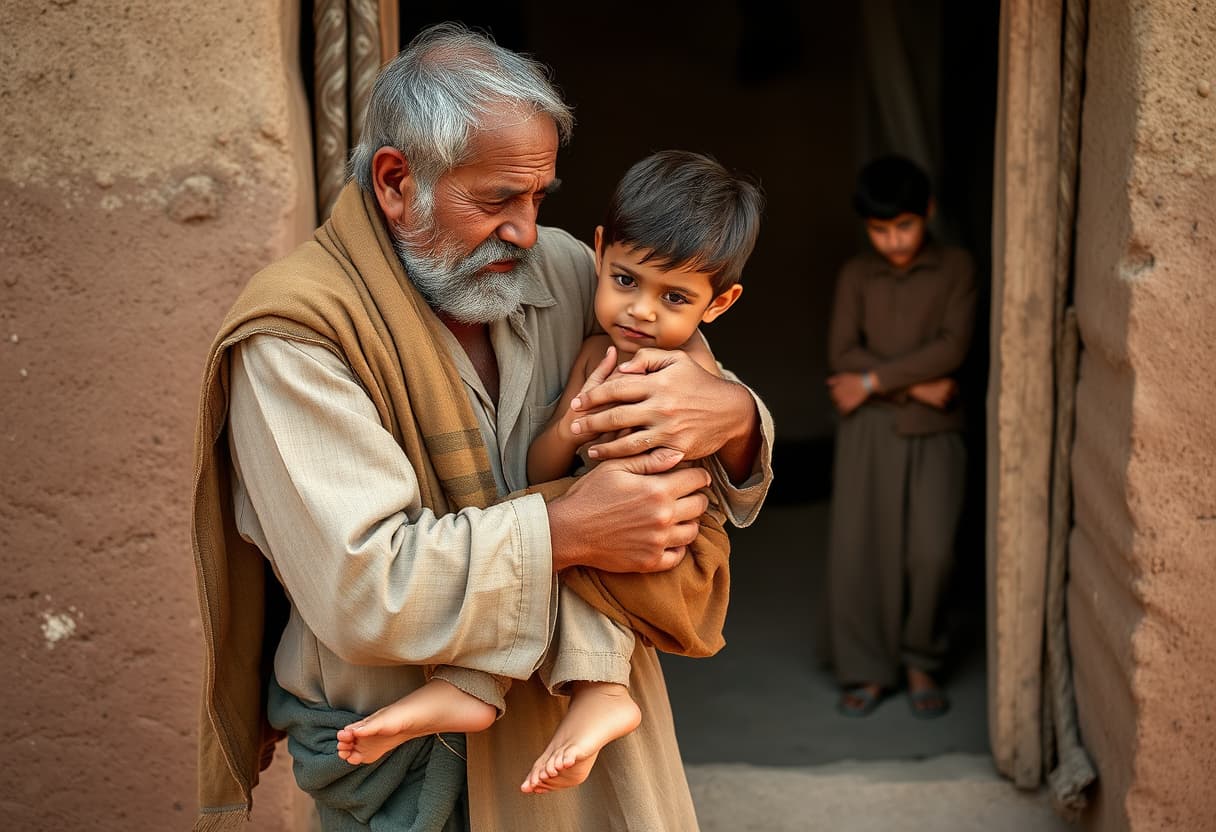
There is a danger in familiarity. We think we know the parable of the prodigal son because we have heard it so many times: a wasteful son, a loving father, a happy ending. The story has been reduced to a warm illustration of forgiveness, and in the process something has been lost.
Reading it slowly — paying attention to what would have shocked its original audience — recovers something close to the original force.
The Insult at the Beginning
The parable opens with the younger son asking his father for his share of the inheritance while the father is still alive (Luke 15:12). In a first-century Palestinian context, this request would have been scandalous. Inheritance is received at death. Asking for it early was functionally saying: I wish you were dead.
The father's response would have been equally shocking to the audience: he divides the estate and gives the younger son his share. No rebuke. No conditions. A parent absorbing a profound insult and honoring the request.
This is the first glimpse of the father's character — and it should reframe everything that follows.
The Far Country
The younger son liquidates his share, travels to a distant country, and "squanders his wealth in wild living." The Greek word is asōtōs — recklessly, without saving. He wastes not just money but the social fabric of his relationships and identity.
When the money runs out, he hires himself out to feed pigs — for a Jewish audience, an image of maximum degradation. Pigs are unclean animals. Tending them places the son outside every boundary of his community and religious identity.
He "comes to himself" — a beautiful phrase — and rehearses a speech. The speech is strategic: I'll go back as a hired servant, not a son. I'll earn my way. It is not a repentance of the heart but a rational calculation about survival.
"And he arose and came to his father." The journey back is the turning point, but the parable's surprise is still ahead.
The Father Who Runs
"But while he was still a long way off, his father saw him and was filled with compassion for him; he ran to his son, threw his arms around him and kissed him."
In the ancient Mediterranean world, a man of means did not run. Running required hitching up your robe, exposing your legs — an undignified act for a patriarch. The father sees his son at a distance (which suggests he had been watching, waiting) and abandons his dignity entirely to reach him.
He does not let the son finish his rehearsed speech. Before the words are out, the father calls for the best robe, a ring, sandals, a feast. The robe signals honor. The ring restores authority. The sandals mark him as son, not servant — servants went barefoot.
The father does not reinstate the son cautiously or on probation. He reinstates him extravagantly and immediately.
The Elder Son: The Parable's Sharpest Edge
This is where most retellings of the parable end, and where the real challenge begins.
The elder son, working in the field, hears the celebration and refuses to go in. His complaint to the father is full of resentment: "All these years I've been slaving for you and never disobeyed your orders. Yet you never gave me even a young goat so I could celebrate with my friends. But when this son of yours — not 'my brother,' but 'this son of yours' — who has squandered your property with prostitutes comes home, you kill the fattened calf for him!"
The elder son has been faithful. He has done everything right. And he is furious.
The father's response is tender and does not dismiss the grievance: "My son, you are always with me, and everything I have is yours." But then the father defends the celebration. The lost has been found. The dead is alive.
The parable ends without resolution. We do not know if the elder son goes in or stays outside. This is not an accident — it is the point. The parable was addressed to the Pharisees and teachers of the law who were grumbling about Jesus eating with sinners. They are the elder sons. The open ending is an invitation.
What the Parable Is Actually About
The parable is not primarily about the younger son's journey of repentance. It is about the character of the father — who absorbs insult, watches for return, runs in undignified joy, and refuses to let either son define the terms of belonging.
And it is about the spiritual danger of the elder son's position: doing all the right things, and still standing outside the feast because you cannot accept that grace does not measure what you have earned.
¹ Kenneth E. Bailey — The Cross and the Prodigal (2005), IVP ² Kenneth E. Bailey — Jacob and the Prodigal (2003), IVP ³ Timothy Keller — The Prodigal God (2008), Dutton